Denim in AI fashion images: washes, stitching and rivets that stay crisp
How to word jeans and jackets in AI fashion images: wash, thread colour, rivets and hems that stay sharp, and how to keep denim from melting into skin.
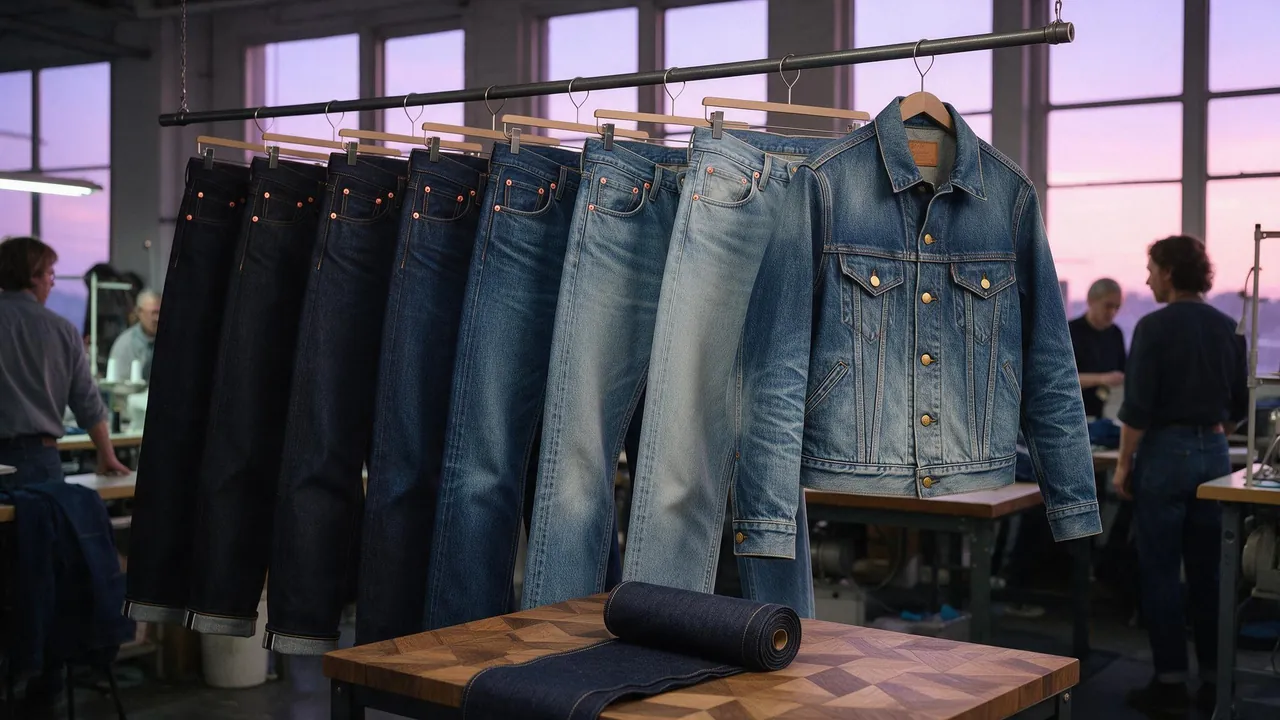
Denim is the garment people trust to look the same in every picture, which is exactly why it goes wrong so visibly. A pair of jeans is a long list of small, repeated facts: a wash, a seam, two rows of thread, a rivet at each pocket corner, a button, a hem. An image model keeps the mood of all that easily and the count of it badly. The result is the familiar blue blur, where the trousers turn into a texture and the texture drifts onto the wrist and the neck.
This guide is about wording denim so the garment keeps its edges. For weave and surface in general, read fabric texture close-ups; for buckles and clasps, accessory shots without warped hardware. Here the subject is indigo itself and the handful of details that make a pair read as jeans.
Name the wash like a buyer would
"Blue jeans" is a request for the average of every pair the model has seen. Give it a wash instead, and give it one. Raw or dry denim is deep, even and nearly black-blue with no fading. A rinse wash is dark but softened. Mid-blue is the classic middle. Stonewashed and light washes carry visible fading, and acid or bleached looks are patchy by design. Each of these produces a different amount of tonal variation, and tonal variation is what makes cloth look like cloth.
- Raw and dark: the easiest wash to keep clean. Even colour, few places for the surface to break up. A good starting point for a crisp result.
- Mid and light: ask for fading where a real pair fades, at the thighs, the knees and the seams, so the wear has a reason to be there.
- Black and grey: the model tends to flatten these into one dark shape, so describe the light on the weave to keep the folds readable.
Stitching and rivets are the proof
What separates denim from any other blue cloth is the construction. Ask for contrast topstitching in a named colour (a golden-orange thread on indigo is the classic), and ask for it on a named place: along the outer seam, around the pocket mouths, at the waistband. Then name the metal: small copper or antique-brass rivets at the pocket corners, a single shank button, a flat fly. Three named details beat ten adjectives. If the stitching is the point of the shot, step the camera in until a seam fills a third of the frame; thread that is a couple of pixels wide has nowhere to be accurate.
Fashion editorial photograph, three-quarter view of a woman in her late twenties in straight-leg mid-blue jeans with gentle fading at the thighs, golden-orange topstitching along the outer seam and pocket mouths, small copper rivets at the pocket corners, a dark shank button, a neat double-turned hem over white leather sneakers. Soft overcast light from a large window on the left, pale concrete wall behind, crisp focus on the seams, 16:9.Keep the denim off the skin
The melting happens at borders. A cropped jacket sits against a bare midriff, a rolled cuff meets an ankle, a sleeve ends at a wrist, and the model blends the textures where they touch. Treat each border as something to describe. Say where the garment ends and give it an edge: a folded cuff with a visible inner lining, a jacket hem that ends above a plain top, a frayed raw edge that stops at a clear line. Putting a different material between denim and skin, such as a white tee under the jacket or socks above the sneakers, gives the model a boundary to hold. Lighting helps as well. Denim is matte and skin has a soft sheen, so a side light with a little contrast keeps the two reading differently.
The jacket problem: pockets, seams and collars
A trucker jacket has a yoke, vertical seams down the chest, two flap pockets and a pointed collar, and a model will happily give you a jacket with half of that. Name the cut and the count that matters to you: a boxy trucker jacket with two chest flap pockets, a pointed collar, vertical seam lines and a row of metal buttons. Oversized and cropped silhouettes are harder than a classic fit, because proportions change and the details have to rearrange. Look at the buttons and the pockets first; if they do not line up on both sides of the placket, it is a re-roll.
Double denim and mixed washes
Head-to-toe denim is a fashion classic and a trap, because two blues next to each other invite the model to merge them. Make the washes clearly different (a light jacket over dark jeans, or the reverse), say that they contrast, and describe a seam or a belt line where they meet. A belt, a tucked tee or a sharp waistband gives the eye a place to stop. For layering and heavier cloth, outerwear and knitwear editorial covers volume and warmth; for pairing denim with patterns, see print and pattern mixing.
A short checklist before you keep a frame
- Zoom to full size on the pockets: are there rivets, and are they the same on both sides?
- Follow one seam from top to bottom. Does the topstitch stay the same colour and spacing?
- Check every border where denim meets skin, a cuff or a hem.
- Count the buttons and compare the two halves of the placket.
- Look at the hem and the sneaker or boot line for a clean fold.
A wrong wash or a missing rivet is a re-roll. A small local flaw, such as one smudged seam, may be worth an edit pass with one of the edit models listed on the models page; inspect the edit as closely as the original, since it can introduce a new mistake.
Know the limits. Stitching will not match from one frame to the next, a brand patch, a leather label or a printed tag will not be legible, and a pair that must match a real product to the thread is beyond what an image model promises. Use these images as fictional fashion visuals for mood, concepts and lookbooks, with a fictional model of legal age if anyone is in the frame. The price shows on the Generate button before you run, so test the wash and the framing cheaply and spend on the final. Start in the studio.
Questions
Why does my AI denim look like one blue blur?
A prompt that only says blue jeans gets an average. Name one wash, a thread colour and a metal, tie each to a place on the garment, and step the camera closer when the seams matter.
How do I stop jeans from blending into skin?
Describe the border: a folded cuff, a jacket hem above a plain top, a tee or socks between denim and skin. Side light with a bit of contrast also separates matte cloth from skin.
Is double denim safe to generate?
Yes, if the two washes clearly contrast and a belt, a tucked tee or a waistband seam marks where they meet. Matching blues tend to merge.
Can I get an exact copy of a real pair of jeans?
No. Stitching, labels and patches drift between frames. Use denim images for concepts and mood rather than as a copy of an existing product.