A ski and apres-ski fashion editorial with AI: snow glare to fireside
One fictional model from the slope to the chalet: ski suits, base layers, goggles and boots, shot in hard snow glare and then in warm firelight.
A ski editorial has two lighting problems that pull in opposite directions. On the slope, the whole world is a reflector: snow throws sunlight back up under the chin, white suits blow out, and every lens turns into a mirror. Two hours later the same model sits in a chalet lit by one fire and a few lamps, and the challenge flips to keeping skin and fabric readable in deep orange shadow. Most AI ski pictures fail on one side or the other, either a grey, underexposed mountain or a fireside scene that looks like a hotel brochure.
This post plans a short set that crosses that gap with one face. The model is fictional, invented for this page: Ilse Brand, an adult woman in her late twenties with a thick copper braid, a dusting of freckles across the nose and a small scar through her left eyebrow. The scar is the detail to watch, because goggles, hats and firelight all try to erase it.
Snow glare: expose for the white
Write the light before the outfit, and write it as a photographer would on a bright day at altitude:
- Bright overcast or full sun: pick one. "Full sun, cloudless sky, crisp shadows on the snow" and "flat light, overcast, soft shadowless snow" give very different suits, and leaving it open gives a muddle of both.
- Bounce from below: say "light reflected up from the snow onto her face". It fills the shadow under the brim of a helmet or a hat, which is what makes a mountain portrait look real.
- Snow that keeps its detail: "bright white snow with visible texture and sparkle, not blown out". Without it, the ground turns into a flat white sheet.
- Lens and colour: a long lens compresses the peaks behind her; a slightly cool white balance keeps the snow white instead of cream.
The ski suit: name the shell
Ski clothes are technical garments, and the words that make them look right are technical too. Describe the finish and the construction, not just the colour.
- One-piece ski suit: "fitted one-piece ski suit with a belted waist and a high collar" reads as fashion; "snowsuit" reads as a child in the park.
- Shell finish: matte, satin or high-gloss. "High-gloss lacquered shell" catches the glare and looks expensive; matte hides seams and suits a cleaner, sporty look.
- Quilting: say the channel shape, "horizontal channel quilting" or "diamond quilting", or the model invents a different pattern on each sleeve.
- Trim and hardware: "faux fur trimmed hood", "contrast zip down the centre front", "reflective piping". Name only one or two; a suit covered in details looks like gear, not fashion.
- Separates: a cropped puffer jacket over high-waisted stretch ski trousers with stirrups, when you want the waist and the line of the leg to show.
Base layers: they only show at the edges
Thermals are rarely the subject, but they are the most honest part of the look: a ribbed collar above an open jacket, a thumbhole cuff around a glove. Say "fitted ribbed thermal base layer in cream, the high collar visible at the neck of the open suit" and the outfit gains depth. For the apres-ski frames the base layer becomes the outfit, under a chalet sweater or alone with a pair of soft wide trousers. For the stitch and yarn words of the sweater itself, the outerwear and knitwear post already has the full vocabulary, so here one line is enough: name the knit pattern and its colour, then move on.
Goggles and boots: the hardware that drifts
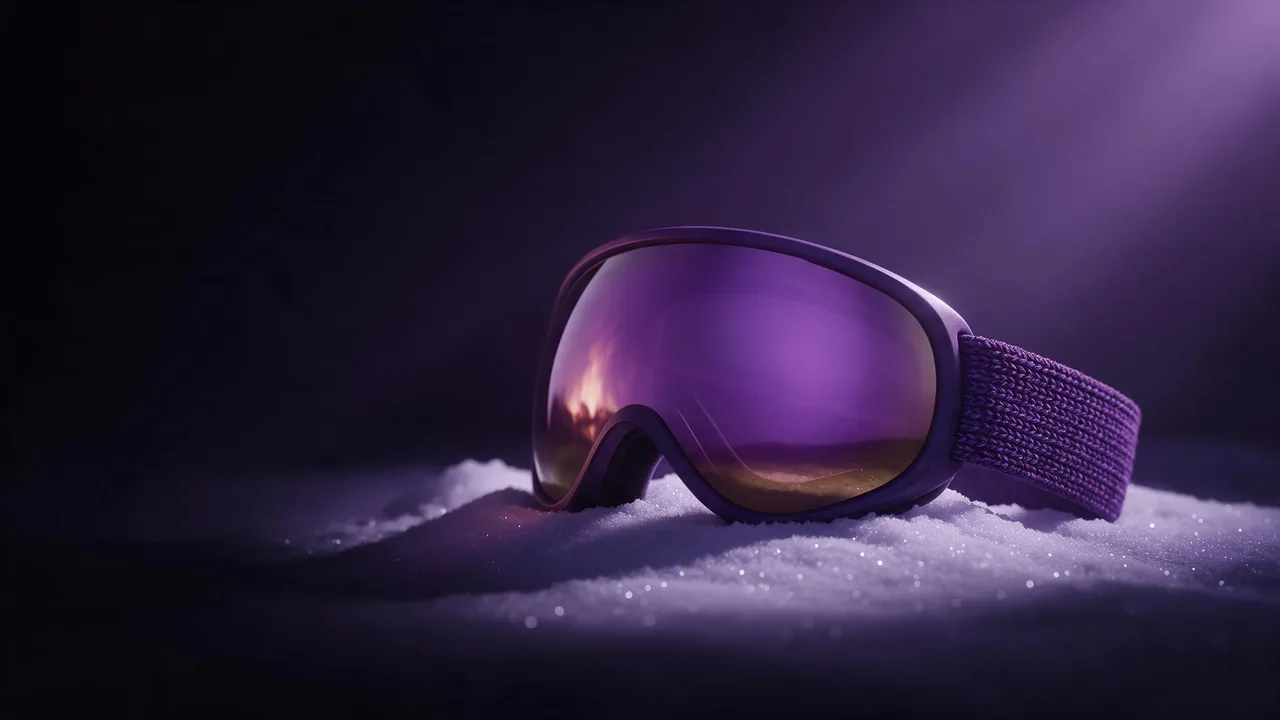
- Goggles on the face: "frameless goggles with a mirrored violet lens reflecting the slope". The reflection is what sells the lens; without it you get a flat coloured visor.
- Goggles pushed up: "goggles pushed up onto the helmet, the strap visible" shows the face and keeps the mountain identity. It is also the easiest way to keep her scar in the frame.
- Ski boots: "glossy white ski boots with four metal buckles". Name the count; buckles multiply or melt when you leave it open.
- Apres-ski boots: "tall faux fur snow boots" or "lace-up leather snow boots with a shearling cuff". Keep the soles chunky and the laces simple.
- Skis and poles: if they appear, keep them crossed over a shoulder or planted upright in the snow. Skis held at an angle in the hands are where geometry breaks most often.
Five frames from the slope to the fire
- Top of the lift: a high-gloss red one-piece suit with a belted waist, goggles on the face, the peaks sharp behind her in full sun.
- Mid-run pause: a white quilted jacket over black stretch trousers, goggles pushed up, a cream base layer collar at the neck, the light bouncing up from the snow.
- Boots off on the terrace: the suit unzipped to the waist, sleeves tied around her hips, the thermal underneath, sitting on a wooden bench with the ski boots unbuckled.
- Blue hour at the door: a long padded coat over the base layer, faux fur boots, warm windows glowing behind her, cold blue snow in front.
- Fireside: a chalet sweater with a patterned yoke, soft wide trousers, wool socks, the copper braid over one shoulder, lit only by the fire and a single lamp.
Fashion editorial photograph of a fictional adult woman named Ilse, late twenties, a thick copper braid, freckles across the nose, a small scar through her left eyebrow. She stands at the top of a ski lift in a fitted high-gloss red one-piece ski suit with a belted waist and a high collar, frameless goggles with a mirrored violet lens reflecting the slope. Full sun, cloudless sky, light reflected up from the snow onto her face, bright white snow with visible texture and sparkle, not blown out. Long lens, sharp peaks behind her, slightly cool white balance. 4:5.Start frame one in a text-to-image model such as FLUX 3 text-to-image, and if the goggles hide too much of her face, render a second version with them pushed up. That second frame, face fully visible, is the reference for everything after.
Crossing from snow light to firelight
The fireside frame is where the face drifts most, because warm low light changes skin tone and hides small features. Do not write it as a new picture. Send the reference frame to an edit model like Nano Banana 2.1 edit and describe the change of clothes and place, then name the new light as precisely as you named the glare.
Keep the woman from the reference image exactly: her face, her freckles, the small scar through her left eyebrow and her copper braid. Change her outfit to a cream chalet sweater with a patterned yoke, soft wide grey trousers and wool socks, and seat her on a sheepskin rug beside a stone fireplace in a wooden chalet at night. Warm firelight from the left, one small lamp behind her, deep soft shadows, the scar still visible. 4:5.Check before you post
- The scar: the first thing goggles, hat brims and firelight erase. If it is gone, redo the edit and repeat it in the prompt.
- The snow: grey snow means the frame is underexposed; a pure white sheet means it is blown out. Ask again for texture and sparkle.
- The goggle lens: it should reflect the slope or the sky. A flat colour reads as plastic.
- The buckles: count them on every boot in every frame.
- The fire: flames can turn into a glowing blob or a second light source in the wrong place. Keep one fire and say where it is.
Every render shows its price before it runs, so try the light on a quicker model and spend on the frames you keep. Compare models on the models page and start the set in the studio. Keep Ilse and anyone like her fictional: a generated character of legal age, never a photo of a real person.
Questions
Why does the snow in my ski photos look grey?
The model is protecting the face and underexposing everything else. Ask for bright white snow with visible texture, name the sun or the overcast sky, and add light reflected up from the snow onto the face.
How do I keep the face readable when the model wears goggles?
Render one frame with the goggles pushed up onto the helmet or hat, and use that frame as the reference for every edit. Frames with goggles on the face then only need to keep the hair, the jaw and the outfit.
Why does my fireside scene change her face?
Warm low light shifts skin tone and hides small features. Make the fireside frame as an edit of the daylight reference, list the features that must stay, and describe one fire and one lamp rather than a vague cosy glow.