An outerwear and knitwear editorial with AI: coat, wool and knit words
Coat cuts, wool and knit-stitch words a model understands, how to layer a winter look, and how cold light and setting make the fabric look touchable.
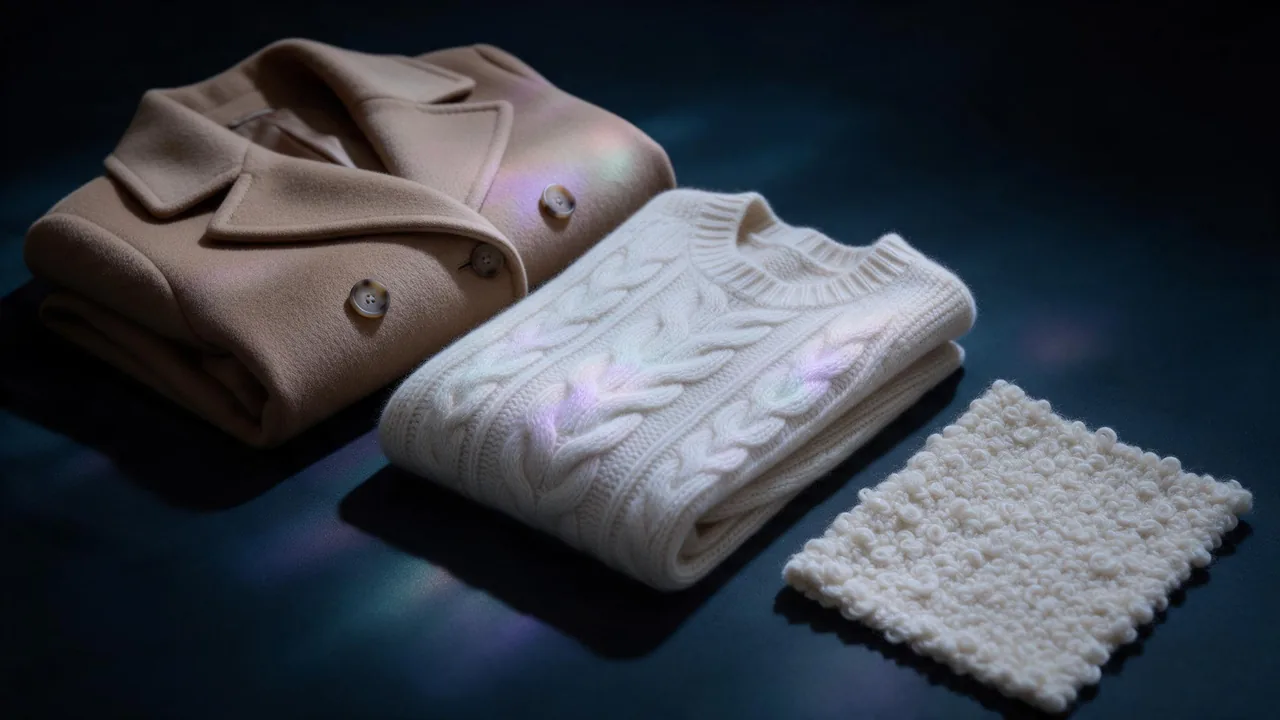
Summer fashion images sell a silhouette. Winter images sell a fabric. Nobody looks at a coat editorial for the outline alone; they look at how heavy the wool seems, whether the knit looks soft enough to touch, how the collar sits against the cold. An image model can draw all of that, but only if you give it the words. "A warm coat and a sweater" gets you a catalogue mannequin. "A double-faced camel wool wrap coat over a chunky cream cable knit" gets you a cover.
This post is the cold-weather vocabulary in three layers (the coat, the cloth, the knit), then how to stack them on one body and how to light and place the scene so the texture carries the picture. The model throughout is fictional: Sonja Vale, invented for this page, an adult woman in her thirties with short dark hair.
Layer one: name the coat by its cut
Coat names are old tailoring words, and image models learned them from decades of catalogue captions. Use the name and you get the proportions that come with it.
- Wrap coat: no buttons, closed with a self-tie belt. Soft, relaxed, reads as luxury in camel or oatmeal.
- Cocoon coat: rounded shoulders, wide through the body, tapering at the hem. Modern and sculptural.
- Chesterfield: a tailored knee-length coat with notch lapels, often with a velvet collar. Classic, sharp.
- Double-breasted overcoat: two rows of buttons and peak lapels. Say the button colour; horn and tortoiseshell read richer than black.
- Car coat: hip length, straight, simple collar. Good when the skirt or trousers matter too.
- Duffle coat: a hood and toggle fastenings with rope loops, usually in thick melton. Casual and graphic.
- Puffer: a quilted down jacket. Say the channel width and the finish (matte, glossy, cropped, long).
- Cape coat: sleeveless or with arm slits, falling from the shoulders. Dramatic in movement.
Add the length ("ankle-length", "just below the knee", "cropped at the hip") and how it is worn ("open", "belted at the waist", "draped over the shoulders"). Coats worn over the shoulders without the arms in the sleeves are a fashion cliche for a reason: they show both the coat and what is under it.
Layer two: name the cloth
The same coat in different cloth is a different picture. The fibre and the finish tell the model how the surface catches light and how the fabric falls. "Wool" alone is too vague; pick one of these:
- Double-faced wool: thick and smooth on both sides, with clean unlined edges. Falls in heavy, soft folds.
- Cashmere: a fine, slightly hazy surface with a gentle sheen. Ask for a soft halo of fibres in backlight.
- Melton: dense, felted, almost matte. Holds sharp lines; good for duffle and military shapes.
- Boucle: looped, nubby yarn with a bumpy surface. The most textured cloth there is, and it photographs as texture even at full length.
- Herringbone and tweed: woven patterns with visible flecks. Treat them like prints: keep the scale large enough not to shimmer.
- Mohair and alpaca: long, fuzzy fibres that blur the outline. Lovely in a close crop, mushy at a distance.
- Shearling: sheepskin with the curly fleece turned out at the collar and cuffs. Name the colour of the fleece and the suede separately.
Layer three: name the stitch
A "sweater" is a shape. A knit is a stitch, and the stitch is what makes winter look warm. These are the words that come back as recognisable structures:
- Cable knit: twisted rope-like columns down the front. The classic; say how many cables if you care.
- Rib knit: fine vertical ridges, close to the body. Calm, works under a coat.
- Fisherman rib: a plump, deep rib with lots of depth, usually in cream.
- Chunky knit: thick yarn, big stitches. Instantly cosy, and it adds bulk to the figure.
- Waffle and honeycomb: a grid of small cells. Subtle texture for a close frame.
- Fair Isle: small coloured motifs in horizontal bands, often around the yoke. Busy, so give it a plain coat.
- Pointelle: small open holes in a pattern, a light and feminine knit.
Stack the layers on one body
Layering is where a model is most likely to lose track: a scarf melts into the lapel, the sweater collar disappears, the coat grows a second set of sleeves. Describe the outfit from the inside out, one garment per clause, and say what is visible of each layer.
Three-quarter fashion photograph of a fictional adult woman named Sonja, short dark hair, standing on a frosty stone bridge in the early morning. From the inside out: a cream fisherman rib turtleneck, its collar folded once and visible at the neck; an oatmeal boucle cocoon coat, open, falling just below the knee, its looped texture clear in the light; a long charcoal cashmere scarf hanging loose over the coat. Her breath shows faintly in the cold air. Low winter sun from the side, 85mm, 4:5.Keep the colour story narrow: three or four tones from one family (camel, cream, oatmeal, charcoal) layer gracefully; six colours look like a jumble sale. For planning a whole season of pieces that combine, the capsule wardrobe post does the maths.
Cold light and setting sell the fabric
Texture only exists where light skims it. Flat front light makes boucle look like a print and cashmere look like felt. Winter gives you the best light for fabric, as long as you name it:
- Low winter sun from the side: long raking light that throws every cable and loop into relief. The single best choice for knitwear.
- Overcast snow light: soft and even, bounced up from the ground. Kind to faces, shows colour truly, flattens deep texture a little.
- Backlight with a rim: the sun behind the model lights the fuzz of mohair and cashmere as a glowing edge.
- Blue hour with warm windows: cold ambient light and warm practical lights behind. The coat reads as protection against the cold.
The setting does the rest of the selling. A wool coat makes sense on a frosty bridge, a snowy platform, a windswept beach in January, a stone stairway with bare trees. Breath in the air, a few snowflakes on the shoulders, a gloved hand holding the collar shut: small cold details make the warmth of the fabric believable. The terms for the light itself are in the beauty light glossary.
Keep the coat identical across the editorial
Like prints, knits are redrawn from scratch in every frame: the cables move, the boucle loops change size. Render the coat and the sweater once each, flat on a plain ground, and keep the best. Then dress Sonja with Bria Virtual Try-On, which takes a person photo and garment references, and move her through new scenes with Nano Banana 2.1 edit, passing the dressed frame and the flat garment as references. When one frame came out in the wrong light, fix the light rather than the outfit with Bria Relight.
Be honest with yourself about the limits. Fine stitches drift between frames even with a reference, deep pile like shearling can turn smooth, and a long scarf over an open coat is a common place for garments to merge. Check every frame at full size, and test a look on a quicker model first; the price of each render shows before you run it.
Plan the shoot with the art direction guide, pick a model on the models page, and start in the studio. Keep the model fictional: a generated character of legal age, never a photo of a real person.
Questions
Why does my knit sweater look flat or painted on?
Usually the light. Front light hides texture. Ask for low side light or backlight, and name the stitch (cable, fisherman rib, chunky knit) instead of just saying sweater.
Which fabric shows texture best at full length?
Boucle and chunky knits, because their structure is big. Cashmere, mohair and fine ribs read better in a closer frame, where the fibres have enough pixels.
How do I stop the scarf and the coat merging into one garment?
Describe the outfit from the inside out, one clause per garment, give each its own colour and texture, and say where each one sits, for example a charcoal scarf hanging loose over an open oatmeal coat.