A party-season eveningwear editorial with AI: sequins, velvet, satin and lamé
Sheen versus sparkle, drape and crush, tungsten, candle and night flash: how to prompt evening fabrics and catch melting sequins and plastic satin early.
Evening clothes are made to be seen in bad light. A day dress has to look good in the sun; a party dress has to come alive under a chandelier, a candle on a table and the hard pop of a flash at midnight. That is why "a glamorous evening gown" so often renders as a shiny, vaguely gold shape: the model knows the dress is supposed to glow, but you never told it how.
Every evening fabric handles light in its own way, and the prompt has to say which way. This post covers the four that carry party season (sequins, velvet, satin and metallic lamé), the words for how they fall, the three kinds of night light that flatter them, and the failures to catch before you show anyone the frame. The model in every example is fictional: Livia Moreau, invented for this page, an adult woman in her late twenties with a sleek dark bob.
Sheen or sparkle: decide before anything else
Shiny is not one thing. A satin dress and a sequin dress are both shiny, and they look nothing alike, because they reflect light in different shapes. Name the shape and the model stops guessing.
- Sparkle: light breaks into many small points. Sequins, paillettes, crystal beading, glitter knit. It reads as busy and festive, and it is the hardest surface for a model to keep crisp.
- Sheen: light runs along the fabric in soft, continuous bands that follow the body. Satin, charmeuse, liquid jersey. It reads as quiet luxury and shows every fold.
- Glow: the surface swallows light and gives it back only at the edges of folds. Velvet does this, and so does panne. It looks rich and warm and very dark in the shadows.
- Mirror: the fabric reflects almost like metal, with bright highlights and deep darks. Metallic lamé and foiled fabrics. Bold, and easy to overdo.
Writing "with a soft sheen" or "a dense sparkle of tiny sequins" is often the difference between a picture that looks photographed and one that looks rendered. Pick one dominant reflection per outfit and let the other pieces be calmer.
The words for each fabric that actually render
- Sequins: say the size. "Micro sequins" give a fine shimmer like fish scales; "large paillettes" swing and flash individually. Add "densely sewn" for full coverage, or "scattered sequins on tulle" for a lighter, see-through effect worn over a slip.
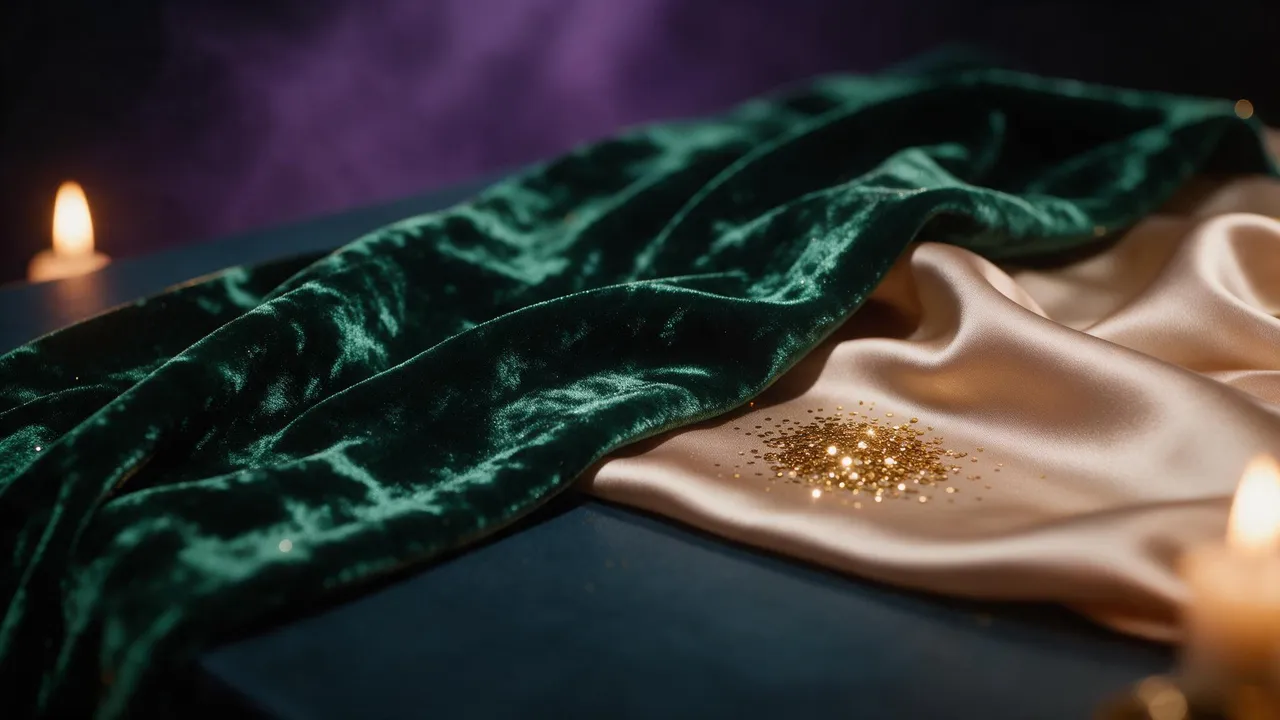
- Velvet: "silk velvet" drapes and glows; "crushed velvet" has a random pattern of light and dark patches; "panne velvet" is flattened in one direction and almost shiny. Name the colour deep (emerald, oxblood, midnight) because velvet darkens every shade.
- Satin: "duchess satin" is heavy and stiff, made for structured gowns and big bows; "silk charmeuse" is light and liquid, made for slip dresses. "Bias-cut" tells the model the fabric skims the body instead of standing away from it.
- Metallic lamé: name the metal (gold, silver, rose gold, pewter) and the surface ("liquid lamé", "pleated lamé", "crinkled lamé"). Without a surface word it often comes back as rigid foil.
Drape, crush and cut
How the fabric falls tells the model how heavy it is, and weight is half of what makes eveningwear look expensive. These are the shape words that come back reliably:
- Column gown: a straight, floor-length line from shoulder to hem. Best for heavy velvet and dense sequins.
- Slip dress: thin straps, bias-cut, skimming the body. The natural shape for charmeuse.
- Cowl neck and cowl back: fabric that falls in soft loops at the neckline or the back. Shows off sheen in every curve.
- Puddle hem: a long skirt that pools on the floor. Instantly formal, and it gives satin and lamé somewhere to catch the light.
- Crush and crinkle: say "crushed" for velvet and "crinkled" or "hammered" for satin and lamé when you want broken, irregular highlights instead of smooth ones.
- Structured bodice: a fitted, boned top that holds its shape. Pair with a full skirt in duchess satin for a ball-gown look.
Night light: tungsten, candle and flash
Daylight words make evening fabrics look like costume. Party clothes belong in artificial light, and each kind of night light favours a different fabric:
- Tungsten: warm, orange-gold light from lamps and wall sconces in a hotel bar or an old apartment. Flatters skin and gold lamé, and turns velvet deep and amber at the edges.
- Candlelight: low, flickering and close to the subject, with deep shadow everywhere else. Satin highlights become small warm streaks; sequins glint only where the flame reaches. Ask for a candle on a table in the frame so the light has a source.
- Direct flash at night: the hard, on-camera flash of a party photograph. Bright subject, background dropping to near black, small sharp shadow behind the figure. Sequins explode into points, and it is the most honest look for a real party.
- Mixed light: a flash on the model with warm tungsten bokeh behind. The classic editorial trick: crisp dress, glowing room.
Fashion photograph at night of a fictional adult woman named Livia, sleek dark bob, standing at the end of a long hotel bar. She wears a floor-length column gown in midnight blue micro sequins, densely sewn, with a deep cowl back, and a cropped black silk velvet jacket draped over her shoulders. Direct on-camera flash lights her, the sequins catching as many small sharp points; behind her, warm tungsten lamps blur into soft bokeh. Her skin keeps a natural matte finish. Three-quarter view, 50mm, 4:5.The terms for softer studio set-ups are in the beauty light glossary. For evening work, the one rule that matters most is to give every light a visible source, a lamp, a candle, a flash shadow, so the reflections on the fabric make sense.
The drift to watch: melting sequins and plastic satin
Evening fabrics fail in recognisable ways. Learn the four below and you will spot them in the thumbnail before they cost you a whole series.
- Melting sequins. The sequins blur into a smear of glitter or a flat metallic foil, especially at the waist and under the arms where the dress folds. Name the sequin size, frame closer, and ask for "individual sequins with tiny dark gaps between them".
- Plastic satin. Highlights so even and bright that the silk looks like vinyl or a latex costume. Ask for a "soft sheen" rather than "shiny", name the fibre (silk, not just satin), and use softer light; hard light on satin is what makes it plastic.
- Felt velvet. The pile disappears and the velvet turns into a flat, matte cloth. Light it from the side and write "the pile changes shade where the fabric folds".
- Armour lamé. Metallic fabric stiffens into chrome plates that do not move with the body. Add a drape word (liquid, crinkled, falling in soft folds) and keep the metal on one garment.
One more drift is easy to miss: shine spreading from the dress to the person. A gold lamé gown can leave the skin looking oiled and the hair lacquered. Say outright that the skin is natural and matte, as in the prompt above.
One gown, the whole night
A party editorial is a sequence: arriving, at the bar, on the dance floor, leaving at three in the morning. Sequins are redrawn on every frame, so fix the gown first. Render it alone on a dressmaker's form, choose the version whose sequins look right at full size, and put it on Livia with Bria Virtual Try-On. For each new moment of the night, send the dressed frame and the gown picture to Nano Banana 2.1 edit and describe only the new setting and pose.
Show the woman from the first image leaving through a revolving door at night, looking back over her shoulder, full-length, 4:5. Keep her face, hair, the velvet jacket and the gown exactly as they are; the sequins must match the second image in size and colour. Warm tungsten from the lobby behind her, cold blue street light in front.When a good frame was shot in the wrong light, say daylight-flat when the story needs candle warmth, change the light instead of re-rolling the dress with Bria Relight. Expect some drift anyway, most of all in fine sequins and in deep folds, and check every frame at full size. Try new looks on a faster model first; each render shows its price before it runs.
Sketch the story of the night with the art direction guide, compare models on the models page, and dress Livia in the studio. Keep your model fictional: a generated character of legal age, never a photo of a real person.
Questions
Why do my sequins look like a melted foil?
The sequins are too small for the frame. Name the sequin size, crop closer so each one has enough pixels, and ask for individual sequins with tiny dark gaps between them.
How do I stop a satin dress looking like plastic?
Ask for a soft sheen instead of shiny, name the fibre (silk charmeuse, duchess satin) and use softer light. Hard, even light gives satin the uniform highlights of vinyl.
Which light suits evening fabrics best?
Tungsten for warmth and gold, candlelight for satin and intimate scenes, direct flash for sequins and a real party feel. Mixing flash on the model with warm lamps behind gives the classic editorial look.